
Format of logs archived to storage through Azure Monitor to change
  1. Posts/

Format of logs archived to storage through Azure Monitor to change

·123 words·1 min
Christoph Petersen
Author
Christoph Petersen
Table of Contents

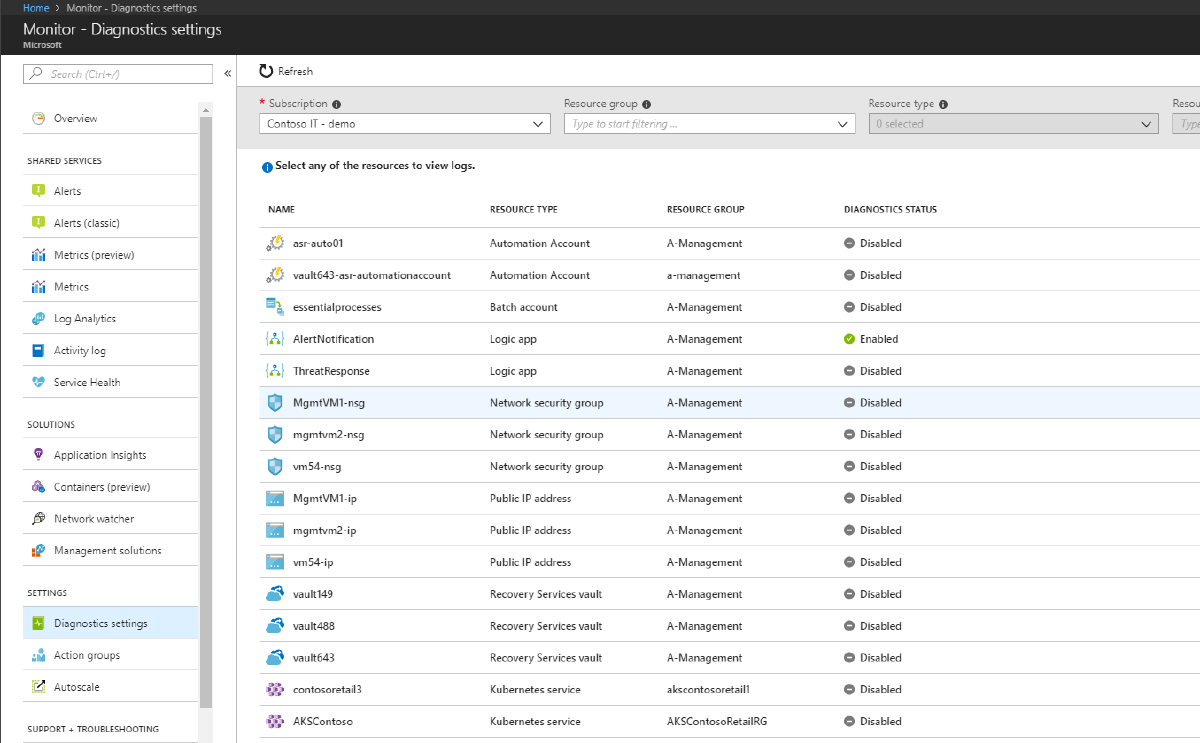
If you are archiving diagnostic logs or activity logs to a storage account through Azure Monitor be aware that on Nov 1, 2018 there will be a breaking change in the format.

The current format of the PT1H.json file in the storage account uses a JSON array or records. This looks something like:

{
    "records": [
        {
            "time": "2016-01-05T01:32:01.2691226Z"
        },
        {
            "time": "2016-01-05T01:33:56.5264523Z"
        }
    ]
}

The blob format will be change to JSON lines. This means each record will be delimited by a newline, with no outer records array and no commas between JSON records:

{"time": "2016-01-05T01:32:01.2691226Z"}
{"time": "2016-01-05T01:33:56.5264523Z"}

More information
#

Please review the documentation on how to find out if you are affected by this change and how to mitigate.

Related

Merge Azure Backup reporting data into one storage account using Logic Apps

·709 words·4 mins
When using Azure Backup to manage (geo-)distributed backups across a company you may find that the Azure Backup Reports with Power BI is limited to a single storage account. Unfortunately the reporting telemetry coming from Azure Backup needs to be written to a storage account that is in the same region as the Recovery Services Vault.

Use Change Tracking to monitor file deployment

·524 words·3 mins
Photo by Ilya Pavlov on Unsplash Change Tracking is a versatile feature that allows to monitor changes on a system (both Windows and Linux). Change tracking covers software installation, changes to services, daemons, Registry and the file system. This is available for both cloud based (Azure, AWS, GCP), on-premises and service provider hosted systems (given network connectivity to Azure).

Azure Monitor Container Health Public Preview

·224 words·2 mins
Photo by frank mckenna on Unsplash Monitoring the container infrastructure which is running your applications is important. With the emergence of managed Kubernetes such as Aure Container Service (AKS) this becomes more tricky as part of the infrastructure is managed by somebody else.